
Relapse Prevention Counseling
Certified relapse prevention counseling in Reno. Build evidence-based coping strategies, identify high-risk triggers, and maintain long-term stability with structured clinical support at our Reno Treatment & Recovery center. Schedule your session today to strengthen your recovery goals.
When someone is working to maintain recovery, the focus often shifts from initial stabilization to identifying triggers, strengthening decision-making, and maintaining consistent support. In Reno, relapse prevention counseling provides a structured way to approach these areas without relying on guesswork or short-term fixes.
I’m Chad Kirkland, a Licensed CADC serving Reno, Nevada.

I work with individuals to develop structured relapse prevention programs, providing the clinical documentation and reports necessary to track progress as a CADC counselor.
Over the past 5+ years, I’ve worked with individuals and families navigating substance use and co-occurring concerns, always adhering to the highest addiction counseling ethics.
I hold the credential of Certified Alcohol and Drug Counselor Supervisor (CADC-S), Nevada License #06847-C, and Supervisor of Alcohol and Drug Counselor Interns, Nevada License #08159-S, through the Nevada State Board of Examiners for Alcohol, Drug and Gambling Counselors.
My approach focuses on practical strategies, structured planning, and consistent follow-through rather than relying on general advice or assumptions.
This is general information; specific needs and safety concerns should be discussed with a qualified professional.
What Relapse Prevention Counseling Is and Who It Helps
Relapse prevention counseling is a structured clinical process focused on identifying triggers, understanding behavioral patterns, and developing practical strategies to maintain stability. It is not limited to abstinence alone, but instead emphasizes awareness, preparation, and consistent decision-making.
Clinical frameworks such as the ASAM Criteria dimensions, DSM-5-TR substance use disorder indicators, and assessment frameworks are used to guide treatment planning and case management. These approaches help ensure that relapse prevention is individualized and grounded in clinical standards.
- Individuals in Reno working to maintain recovery stability and relapse prevention counseling
- Clients in Washoe County needing structured relapse planning
- People navigating triggers, stress, or environmental risk factors
- Individuals with co-occurring mental health and substance use concerns
What to Expect During Relapse Prevention Counseling
The process typically begins with identifying high-risk situations, behavioral patterns, and environmental triggers. Using IC&RC-aligned practice standards, counseling focuses on building practical coping strategies and creating a plan that can be applied in real-world situations.
Practical Note (Reno): If you are traveling from Midtown, Sparks, or South Reno, planning for consistent scheduling—especially during winter weather—can help maintain continuity and reduce disruptions.
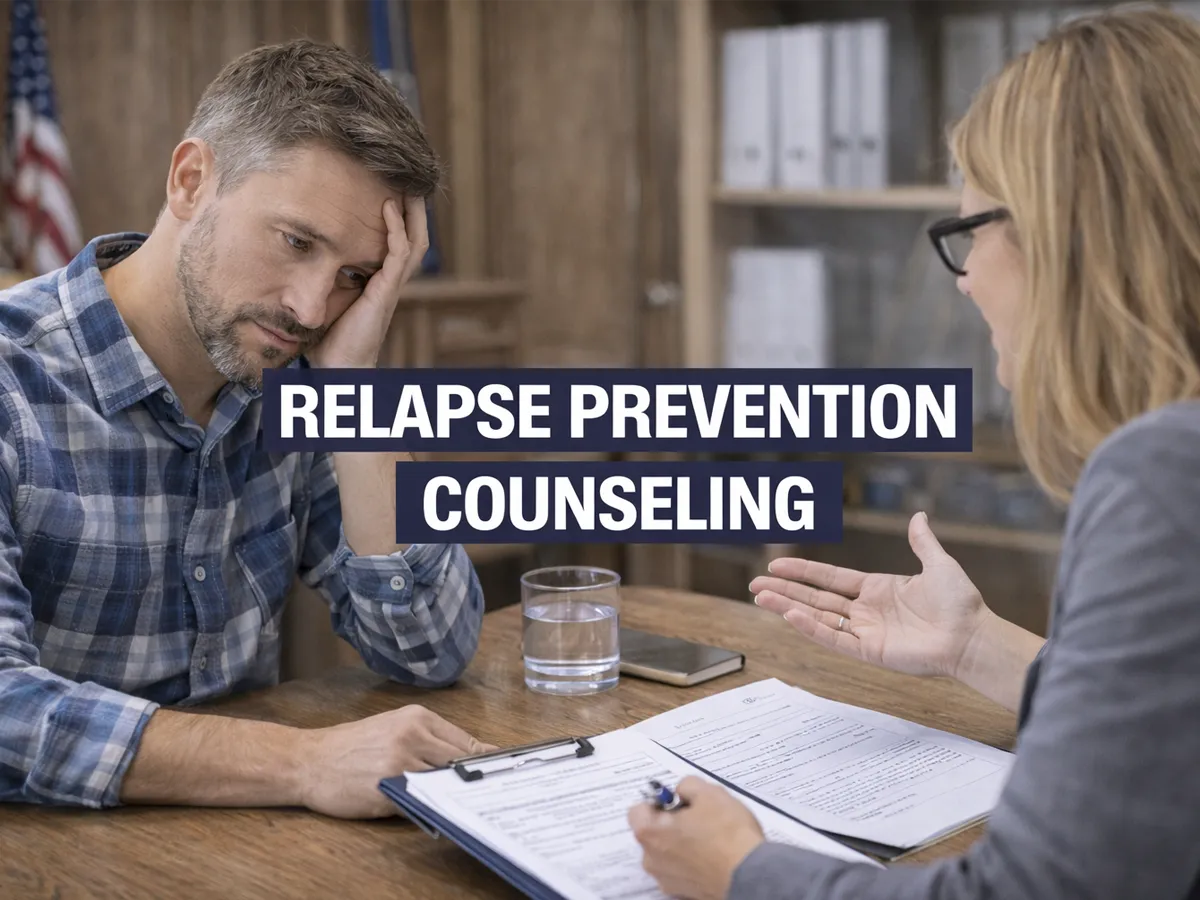
In Reno, substance abuse counseling often centers around practical planning. Developing a structured recovery plan helps individuals anticipate challenges and protects client confidentiality and rights during the process.
I also provide forensic addiction services for those with legal mandates, and we’ll recommend medical evaluation when withdrawal or medical risk may be present.
Immediate 5 Questions About Relapse Prevention Counseling
What is relapse prevention counseling?
It is a structured counseling process focused on identifying triggers, developing coping strategies, and maintaining recovery stability through practical planning and consistent support.
What are common relapse triggers?
Triggers may include stress, environmental factors, social situations, or emotional patterns. Identifying these early helps reduce risk and improve response strategies.
How are coping strategies developed?
Coping strategies are developed through structured discussion, skill-building, and practical application. Techniques are tailored to individual needs and aligned with clinical frameworks.
Is relapse prevention only for early recovery?
No. Relapse prevention can be beneficial at any stage of recovery, as ongoing awareness and planning help maintain long-term stability.
How is confidentiality handled?
Confidentiality is maintained according to confidentiality standards, 42 CFR Part 2, and HIPAA. Information is handled carefully and shared only as appropriate within the scope of counseling.
Why Structured Recovery Planning Matters
A structured relapse prevention plan provides clarity and consistency. In Washoe County, individuals often benefit from having a defined approach that reduces uncertainty and supports decision-making in high-risk situations.
Clear planning also helps reinforce accountability and awareness, making it easier to identify early warning signs and respond effectively before patterns escalate.
Clinical Scope and Ongoing Support
Relapse prevention counseling focuses on behavioral patterns, coping strategies, and structured planning. It remains within clinical scope while supporting individuals in maintaining long-term stability.
If additional support is needed, referral coordination may be recommended to ensure that individuals receive appropriate care based on their specific situation.
Local Trust and Next Step
Confidentiality and discretion are maintained throughout relapse prevention counseling. In Reno, privacy is respected while ensuring that planning and participation remain structured and consistent.
Do not include sensitive medical or legal details in web forms.

Preparation helps support continuity. Consistent scheduling, bringing relevant materials, and staying engaged in the process can improve clarity and reinforce long-term stability.
- Scheduling: maintain consistent counseling sessions
- What to bring: notes, prior plans, or relevant materials
- Referral coordination: additional services may be discussed if needed
If you have questions about relapse prevention counseling in Reno, you can schedule an appointment.