
Drug Assessment & Evaluation
Professional drug assessment and evaluation in Reno for court, probation, or employment. Our structured clinical intake provides individuals in Washoe County with detailed written reports and evidence-based findings to meet legal and organizational standards with clarity and privacy.
When someone needs a drug assessment, the process should be clear, objective, and clinically grounded from the start. In Reno, people often come in with questions about how substance use is evaluated, what information is reviewed, and how recommendations are developed without adding confusion or unnecessary pressure.
I’m Chad Kirkland, a Licensed CADC serving Reno, Nevada.

My work includes structured drug assessments, clinical substance use evaluations, and providing the necessary clinical documentation and reports for legal or personal use.
My experience includes 5+ years supporting individuals and families dealing with substance use and co-occurring concerns as a CADC counselor.
I hold the credential of Certified Alcohol and Drug Counselor Supervisor (CADC-S), Nevada License #06847-C, and Supervisor of Alcohol and Drug Counselor Interns, Nevada License #08159-S, through the Nevada State Board of Examiners for Alcohol, Drug and Gambling Counselors.
I use a calm, non-judgmental approach, maintaining strict professional ethics so the assessment stays focused on clinically relevant information and practical next steps.
This is general information; specific needs and safety concerns should be discussed with a qualified professional.
What a Drug Assessment and Evaluation Is and Who It Helps
A drug assessment and evaluation is a clinical review of substance use history, current patterns, behavioral health concerns, functional impact, risk level, and treatment needs. The purpose is to understand the person’s presentation in an organized way and provide recommendations tied to clinical standards. In Reno, these evaluations may be used for treatment planning and case management or a structured intake process.
The evaluation may be informed by ASAM Criteria dimensions, DSM-5-TR substance use disorder indicators, and evidence-based assessment frameworks. These standards help create an objective clinical picture, especially when drug use concerns overlap with family stress, anxiety, or depression.
- People in Reno who need DUI drug and alcohol assessments
- Individuals in Washoe County who need probation compliance counseling guidance
- Clients preparing for counseling, education, or additional recovery support
- People who want a structured intake process with careful documentation and privacy
What to Expect During a Drug Assessment
The assessment usually begins with a clinical interview focused on drug use history, health and safety concerns, and how substance use may be affecting work or home life. I utilize IC&RC-aligned practice standards to identify support needs and provide clear forensic addiction services documentation when required by outside systems.
Practical Note (Reno): If you are coming from Midtown, Sparks, or South Reno, it can help to allow extra time for scheduling, parking, and winter weather so the intake process can be completed without feeling rushed.
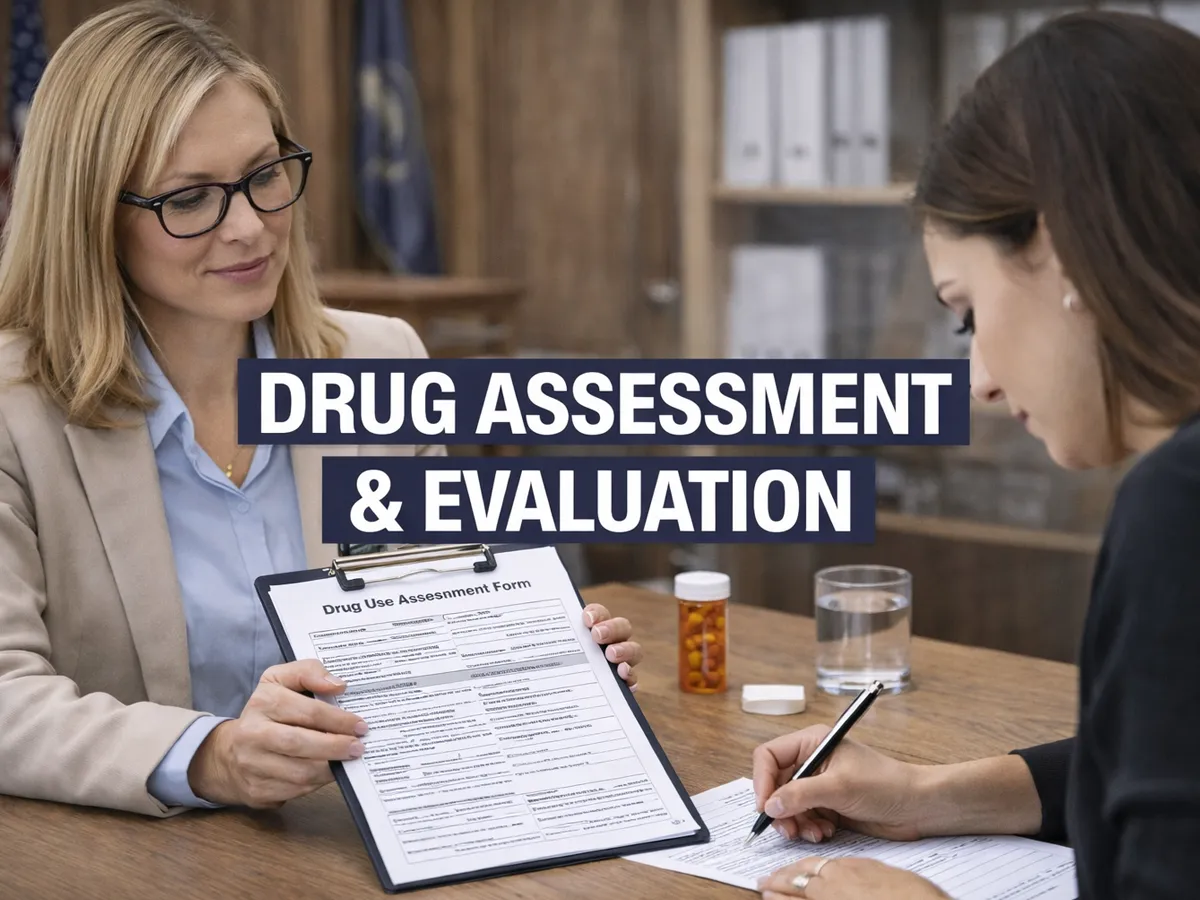
A well-run assessment does more than gather background information. In Reno, many people feel more comfortable when the process is transparent and the findings respect client confidentiality and rights while ensuring all reporting is clinically sound.
We can explain options and coordinate referrals, and we’ll recommend medical evaluation when withdrawal or medical risk may be present.
Immediate 5 Questions About Drug Assessment and Evaluation
What is the main purpose of a drug assessment?
The main purpose is to review drug use concerns in a structured clinical way so treatment needs, risk factors, and support options can be identified. The assessment helps organize the person’s history, current presentation, and functional concerns so recommendations are based on actual findings rather than assumptions.
What kinds of information are usually reviewed?
A drug assessment usually reviews substance use history, current patterns, prior treatment, relapse history, behavioral health concerns, support systems, and the impact of use on daily life. When relevant, co-occurring concerns may also be discussed because they can affect stability, motivation, and treatment planning.
Does a drug assessment automatically lead to treatment?
Not automatically. Recommendations depend on what the assessment shows. Some people may need counseling, education, or a higher level of care, while others may need monitoring, referral coordination, or additional evaluation. The assessment is meant to guide the next step, not assume one before the process begins.
How is privacy handled during the assessment process?
Privacy should be handled carefully throughout the assessment. Clinical information should be gathered and documented with attention to confidentiality standards, including 42 CFR Part 2 and HIPAA. It is important to explain what information is being collected, how it may be used, and when release or referral communication may be appropriate.
What happens after the evaluation is completed?
After the evaluation is completed, the findings are organized into a clinical summary with recommendations. This may involve relapse prevention strategies or coordination with another provider involved in the treatment process.
Why Clear Assessment Findings Matter
A clear drug assessment helps reduce uncertainty. It gives the person a better understanding of what the clinical concerns are, how severity is being considered, and why certain recommendations may follow. In Washoe County, that clarity can be especially helpful when the next step may involve counseling, referral support, or added services outside the initial intake setting.
Good assessment work should also be specific enough to guide planning without becoming overly broad. The goal is to document relevant findings, note strengths and barriers, and connect recommendations to the person’s actual circumstances so the next step makes clinical sense.
Clinical Boundaries and Referral Support
A licensed CADC can assess substance use patterns, review treatment history, document findings, and recommend clinically appropriate support within scope. That includes discussing how drug use may affect functioning, readiness for change, relapse risk, and treatment needs. At the same time, an assessment should stay within professional boundaries and not substitute for medical or legal advice.
When the assessment raises concerns about withdrawal risk, medical instability, or other issues beyond counseling scope, medical or specialty referral may be recommended. That helps keep the process clinically responsible and supports better coordination for people in Reno who may need more than one kind of service.
Local Trust and Next Step
Confidentiality and discretion matter throughout the intake and evaluation process, especially when someone is discussing personal substance use concerns. In a Reno office setting, it helps when the process is explained clearly, records are handled carefully, and the person understands how clinical documentation is being used to support treatment planning.
Do not include sensitive medical or legal details in web forms.

Preparing for a drug assessment is often easier when the process is organized from the beginning. That may include confirming scheduling, understanding what documents to bring, and clarifying whether referral information is part of the intake record. A structured process helps the evaluation remain focused, confidential, and easier to understand.
- Scheduling: allow enough time for the interview, intake review, and any follow-up questions
- What to bring: any referral paperwork, relevant prior treatment information, and any documents connected to the assessment request
- Referral coordination: next-step communication with an authorized provider or referral source can be discussed when appropriate
If you need to complete an assessment in Reno or have questions about the process, you can schedule an appointment.