
Clinical Documentation & Progress Reports
Clinical documentation and progress reports help organize treatment, clarify recommendations, and communicate necessary updates in a professional, careful way. For people in Reno and Washoe County, clear records can support continuity of care, referral coordination, and appropriate next steps while protecting privacy and maintaining clinical standards.
When someone needs a clear explanation of treatment status, attendance, participation, or clinical recommendations, the quality of the written record matters. In Reno, these documents are often part of ongoing care, coordination with referral sources, or follow-up planning that needs to stay accurate, professional, and discreet.
I’m Chad Kirkland, a Licensed CADC serving Reno, Nevada.

My role includes preparing clinically grounded documentation that reflects assessment findings, treatment participation, progress patterns, and appropriate recommendations for substance use and co-occurring concerns. I ensure all clinical documentation and reports meet the highest professional benchmarks.
I’ve spent 5+ years working with individuals and families affected by substance use and co-occurring concerns as a CADC counselor.
I hold the credential of Certified Alcohol and Drug Counselor Supervisor (CADC-S), Nevada License #06847-C, and Supervisor of Alcohol and Drug Counselor Interns, Nevada License #08159-S, through the Nevada State Board of Examiners for Alcohol, Drug and Gambling Counselors.
My approach is careful, non-judgmental, and focused on documentation that is understandable, clinically relevant, and appropriate for the purpose it serves.
This is general information; specific needs and safety concerns should be discussed with a qualified professional.
What Clinical Documentation and Progress Reports Are
Clinical documentation is the structured record of what was assessed, what was observed, what interventions were used, and how care is progressing over time. In substance use treatment, this can include intake findings, ASAM Criteria dimensions, DSM-5-TR substance use disorder indicators, treatment goals, participation notes, and progress summaries that support continuity of care.
Progress reports are more focused summaries that may explain attendance, engagement, treatment response, current recommendations, and whether additional services or referrals are appropriate. Depending on the situation, these reports may support communication with another provider, a referral source, or a system involved in treatment planning and case management. Motivational Interviewing, the Stages of Change model, SAMHSA recovery principles, and IC&RC-aligned practice standards all help frame documentation in a clinically responsible way.
- People starting treatment and needing an organized clinical record
- People continuing care who need documented progress or updated recommendations
- Individuals with co-occurring concerns requiring coordinated referrals
- Families or referral sources who need clear, limited, appropriate communication
What to Expect From the Documentation Process
The process usually begins with reviewing the purpose of the document, the limits of confidentiality, and what information is appropriate to include. I look at the clinical context, the treatment timeline, and whether the record needs to describe assessment findings, participation, current functioning, or recommendations for a next level of care. That helps keep the report relevant instead of overly broad.
Practical Note (Reno): If you are traveling from Midtown, South Reno, or Sparks, it can help to plan for parking and winter weather delays during colder months, especially when paperwork needs to be reviewed carefully and signed in person.
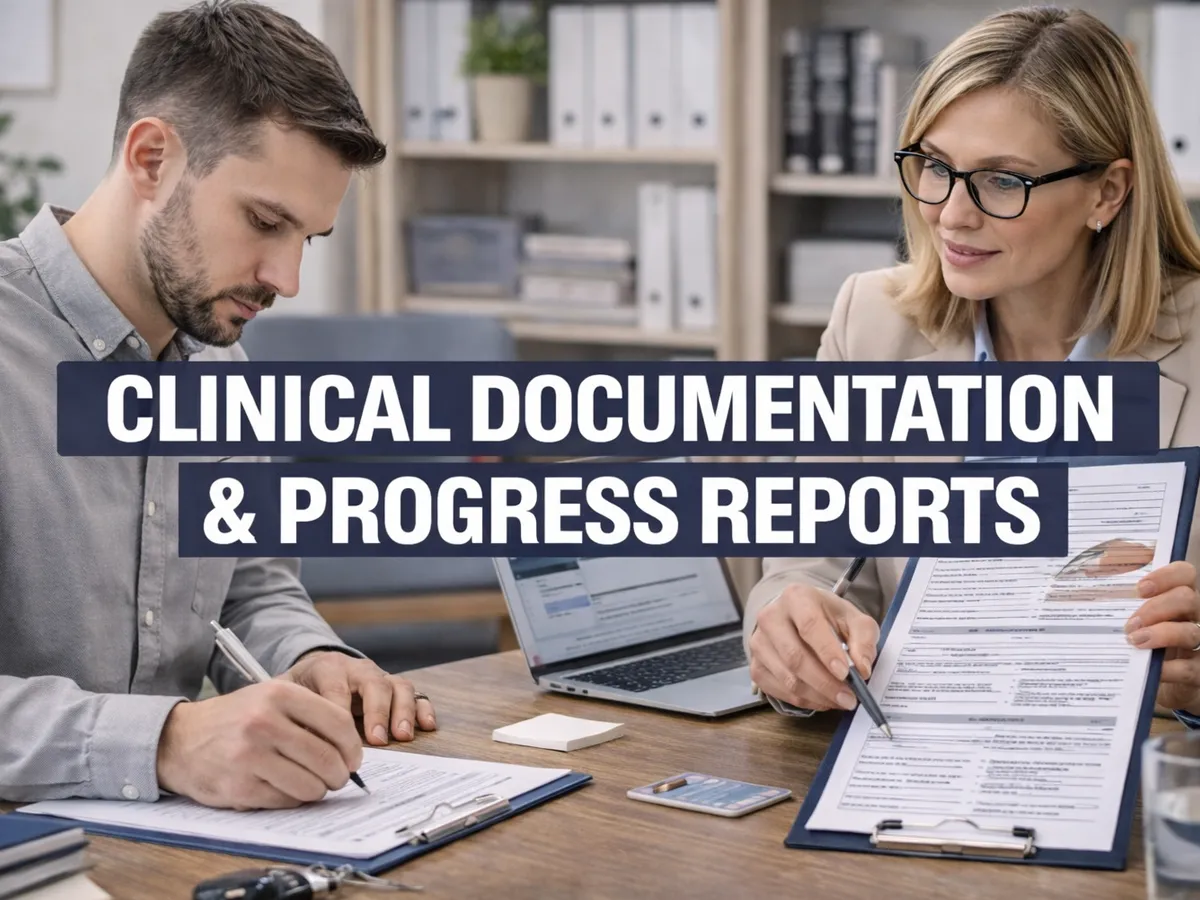
A well-prepared progress report does not just restate that services occurred. It explains the clinical picture in a concise way, notes meaningful changes, and identifies what support may still be needed. In Reno, that clarity can be especially helpful when someone is coordinating care across treatment providers, community referrals, or ongoing recovery planning.
I also consider whether the documentation should reflect barriers to treatment, strengths that support recovery, and whether referral coordination is necessary. We can explain options and coordinate referrals, and we’ll recommend medical evaluation when withdrawal or medical risk may be present.
Immediate 5 Questions About Clinical Documentation
What does a progress report usually include?
A progress report usually includes the reason for services, the treatment time frame, attendance or participation patterns, relevant clinical observations, progress toward goals, and updated recommendations. The exact content depends on the purpose of the report and what information is appropriate to share.
Are these reports the same as a full evaluation?
No. A progress report is generally narrower than a full drug and alcohol assessment. It summarizes treatment-related information and current status, while a full evaluation is more comprehensive and may include diagnostic impressions, history, screening results, and a broader review of needs and risks.
Can documentation address co-occurring concerns?
Yes. When clinically relevant, documentation can note co-occurring concerns that affect treatment planning, engagement, safety, or referral needs. The goal is not to overstate information, but to reflect the factors that matter for coordinated care and appropriate next steps.
How is privacy handled when a report is prepared?
Privacy is handled carefully by limiting disclosures to what is appropriate for the purpose of the report and by following client confidentiality and rights, including 42 CFR Part 2 and HIPAA. When release of information is needed, that should be discussed clearly before information is shared.
When is a referral or added support mentioned in a report?
A report may mention referral needs when the clinical picture suggests another level of care, medical follow-up, psychiatric review, family support, or other services that would help treatment planning. Recommendations should be specific, clinically grounded, and connected to the person’s current presentation.
Why Clear Documentation Matters
Clear documentation supports consistency. It helps the next provider, referral partner, or treatment team understand what has already been observed and what concerns still need attention. In Washoe County, that can reduce confusion when care is moving between counseling, case coordination, support services, or forensic addiction services.
It also helps clients understand where they are in the process. Good records should not read like vague paperwork. They should show the purpose of treatment, where progress is being made, where barriers remain, and how recommendations are tied to the actual clinical picture rather than assumptions.
How Reports Stay Clinically Useful
Useful reports are specific without becoming excessive. They identify the treatment context, summarize the important clinical themes, and describe recommendations in a way that another professional can understand. That is especially important when someone in Reno needs coordinated next steps instead of a generic summary that leaves too much open to interpretation.
Clinical documentation should also stay within scope. A CADC can document substance use treatment, progress, recommendations, and behavioral observations within that practice area. When medical instability, withdrawal risk, or other concerns go beyond that scope, the record should reflect the need for medical or specialized evaluation rather than guessing outside appropriate boundaries.
Local Trust and Next Step
Confidentiality matters throughout this process. Records and communications should be handled with care, discretion, and attention to privacy, particularly when someone wants a more private process in Reno or is concerned about sensitive information being seen by others.
Do not include sensitive medical or legal details in web forms.

When documentation is requested, it helps to identify the purpose early so the report can stay focused and clinically appropriate. That can include progress summaries, treatment participation updates, or referral-related communication. A careful process helps protect privacy while making the record more useful for the person, the provider, and any authorized referral contact.
- Scheduling: plan enough time to review the purpose of the report and any needed releases
- What to bring: any referral paperwork, prior treatment information, or instructions about what the report needs to address
- Referral coordination: reports can support communication with authorized providers or referral sources when appropriate
If you need help understanding the documentation process or want to review what type of report may fit your situation, you can schedule an appointment.